

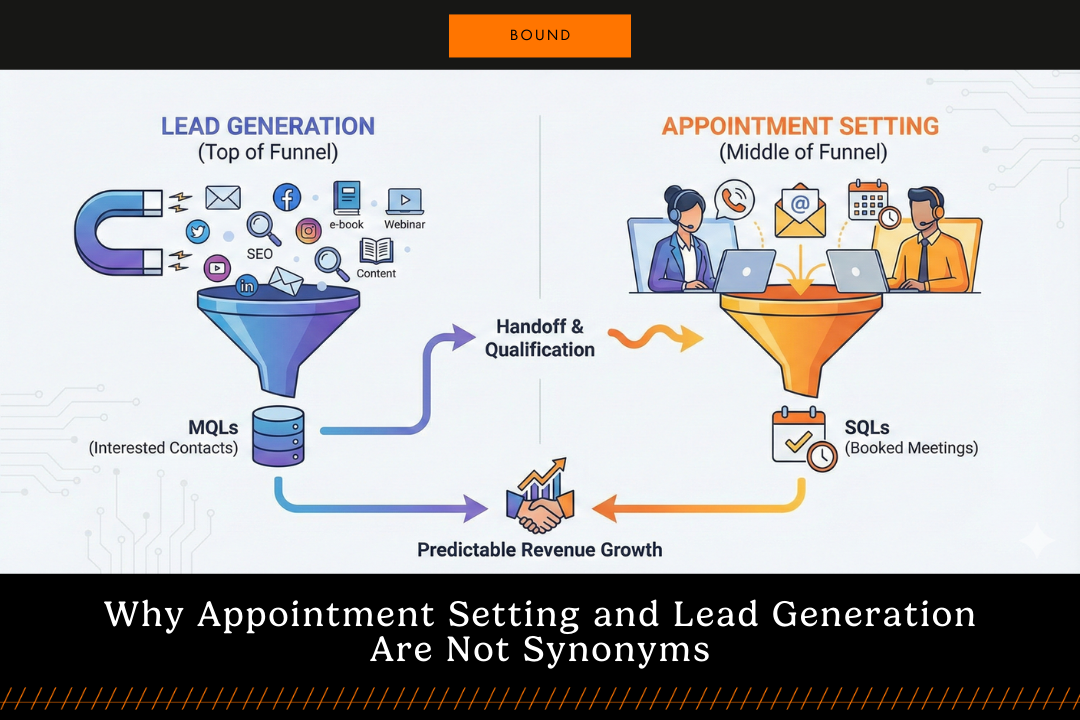
In B2B sales and marketing, “lead generation” and “appointment setting” are often used interchangeably. While both are essential components of a healthy sales pipeline, they serve distinct purposes at different stages of the buyer’s journey. Confusing these terms can lead to misaligned expectations, wasted resources, and frustrated sales teams.
Let’s take a look at what the differences are and how they’re effectively used together.
What Is Lead Generation?
Lead generation is the process of identifying and attracting potential customers who have shown interest in your product or service. The primary goal is to attract prospects, build awareness, and fill the top of the funnel with qualified contacts.
Key activities include:
- Content marketing and SEO
- Social media campaigns
- Paid advertising
- Email marketing
- Trade shows and events
The outcome of lead generation? A large list of interested contacts, often scored as marketing qualified leads (MQLs), with success metrics including the number of leads, cost per lead, and lead quality scores. At this stage, you’ve captured attention and contact information, but you haven’t necessarily confirmed genuine buying intent or readiness to engage with sales.
→ Interested in mastering more lead generation terms? Check out our blog, “Lead Generation Terms: Know the Difference.”
What Is Appointment Setting?
Appointment setting is the process of converting leads into scheduled meetings with sales representatives. The primary goal is to convert generated leads into sales opportunities, or sales qualified leads (SQLs), through direct engagement and qualification.
Key activities include:
- Outreach and follow-up calls
- Email sequences
- Qualification conversations
- Calendar coordination
- Meeting confirmation and preparation
The outcome of appointment setting is booked, confirmed meetings with decision-makers for your sales team. Success metrics include the number of appointments booked, show rate, and appointment-to-opportunity conversion rate. This stage requires human interaction, relationship building, and the ability to handle objections while verifying that prospects have both the authority and intent to purchase.
-1.png?width=668&height=298&name=Gemini_Generated_Image_bv656nbv656nbv65%20(2)-1.png)
The Critical Differences
Stages in the Sales Funnel
- Lead generation = top of funnel awareness
- Appointment setting = middle of the funnel engagement
Level of Qualification
Lead generation produces MQLs, or raw contacts who have shown interest by downloading content or engaging with your brand. Appointment setting delivers SQLs, or vetted prospects who have been qualified through direct conversation. The distinction is critical: interest doesn't equal intent, and a raw contact isn't the same as a prospect ready to buy.
Skills and Resources Required
Lead generation and appointment setting require different expertise. Lead generation relies heavily on marketing skills: content creation, campaign management, and data analysis. Appointment setting demands sales skills: relationship building, active listening, objection handling, and persuasive communication. This is why many organizations separate these functions between marketing and sales development teams.
Time Investment
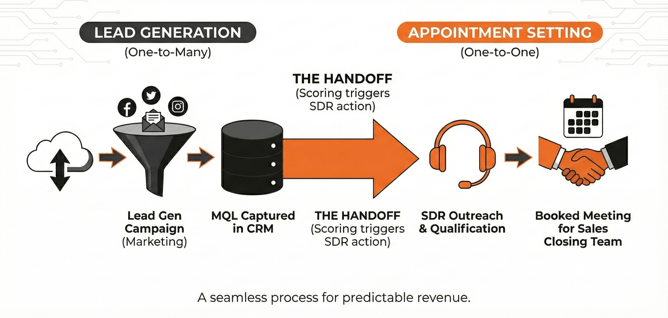
Lead generation can be automated and scaled through marketing technology, allowing you to reach thousands of prospects simultaneously. Appointment setting requires personalized, human interaction for each prospect. The difference impacts both cost structure and scalability.
Measurement of Success
Lead generation focuses on volume and quality metrics: how many leads are generated and at what cost. Appointment setting prioritizes conversion metrics: what percentage of leads become meetings, and how many of those meetings advance to opportunities. These different success measures require different optimization strategies.
-1.png?width=668&height=312&name=Gemini_Generated_Image_bv656nbv656nbv65%20(1)-1.png)
The Relationship Between the Two
These two processes are sequential, not synonymous. They need one another to be the most effective. Strong lead generation fuels appointment setting and streamlines the sales process by providing a steady flow of interested prospects. However, both need to work together, with a seamless handoff process in place, to achieve optimal results.
When You Need Each One
Understanding when to prioritize each function can maximize your ROI.
When to focus on lead generation:
- Building brand awareness
- Expanding your database
- Testing new markets or personas
- Top-of-funnel is empty
When to focus on appointment setting:
- You have leads but low conversion
- Sales team has capacity
- High-value complex sales requiring conversations
- Need to accelerate pipeline velocity
Smart Companies Invest in Both
The most successful B2B organizations recognize that lead generation and appointment setting are complementary but distinct disciplines. Rather than treating them as synonyms, smart companies invest in both processes, ensuring that marketing generates quality leads while specialized sales development representatives convert those leads into meaningful sales conversations. The key is not choosing between lead generation or appointment setting. It’s building a system where both work in harmony to drive predictable revenue growth.
The Partner That Does Both
Looking for a partner that has mastered both lead generation and appointment setting? Turn to Concept. We’ve been a trusted consultant, helping sales and marketing teams with lead generation and appointment setting, since 2002. Contact us to get started.
Partner With Concept
Share your details and our team will reach out to discuss collaboration opportunities