

EmDash Review: Is Cloudflare's New CMS a Real WordPress Alternative?
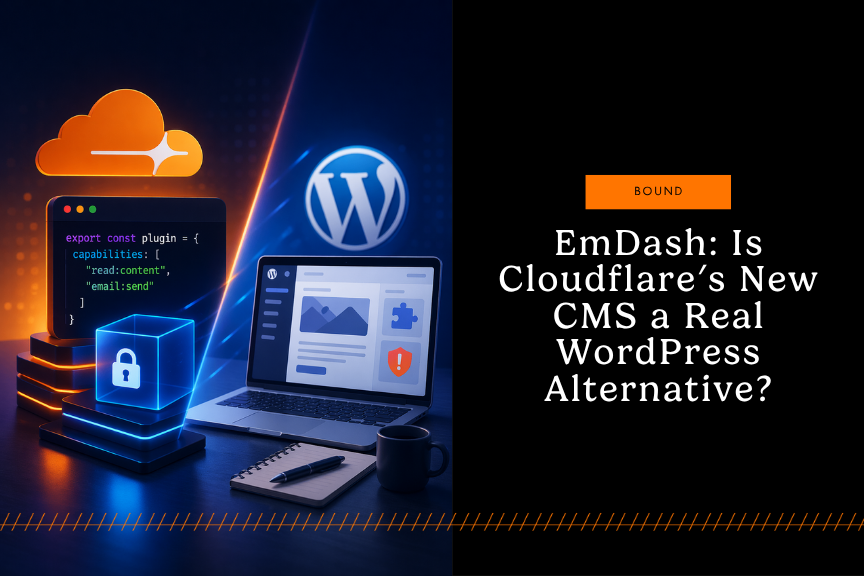
Cloudflare’s EmDash is a new open-source, serverless CMS (released April 2026) that aims to be a modern WordPress alternative by fixing WordPress’s biggest security weakness: plugins. It uses sandboxed “Dynamic Workers” and capability-based permissions, so plugins can only do what they explicitly request.
WordPress powers over 40% of the internet, and it earned that dominance by being flexible, extensible, and widely supported. But it also inherited two decades of architectural debt, especially around plugins.
In April 2026, Cloudflare released EmDash, an open-source CMS positioned as a “spiritual successor” to WordPress. It is built in TypeScript, designed for serverless execution, and engineered to reduce plugin risk through isolation and permissions.
So, is the Cloudflare EmDash CMS a genuine WordPress alternative today, or a promising preview of what CMS platforms could become? This review breaks down the architecture, features, limitations, and use cases to help you decide.
What Is EmDash CMS?
Cloudflare EmDash CMS is an open-source, serverless content management system released in April 2026, built on TypeScript and Astro, and engineered to address WordPress’s longstanding plugin security vulnerabilities through sandboxed isolation and capability-based permissions. If you’re evaluating it as a WordPress alternative, this review covers what sets it apart, where it falls short, and which use cases it actually fits.
EmDash is a full-stack, serverless content management system built on:
- Astro (modern web framework)
- workerd (Cloudflare’s open-source runtime)
- TypeScript and modern web standards
Unlike WordPress, which assumes a traditional server and a PHP runtime, EmDash is designed for a cloud-native world where apps can scale down to zero and scale up instantly.
Licensing and portability: EmDash is MIT-licensed, fully open source, and available on GitHub. You can deploy it to Cloudflare’s edge network, run it on Node.js, or host it elsewhere. Cloudflare optimizes the experience on its infrastructure, but the project is not designed as a hard lock-in product.
The Core Problem EmDash Targets: Plugin Security
WordPress’s most common security failures typically come from the ecosystem around it, not WordPress core itself.
A widely cited industry pattern is that plugin vulnerabilities account for the vast majority of WordPress security issues, largely because plugins often gain deep access to the database and filesystem. When you install a plugin, you are frequently granting broad privileges.
According to Wordfence’s annual WordPress security report, plugins and themes account for the majority of known WordPress vulnerabilities each year, with many exploits stemming from excessive permissions granted at install time. This is the architectural problem EmDash is directly designed to solve.
EmDash’s Approach: Isolate Plugins by Default
EmDash flips the plugin trust model:
- Plugins run in isolated sandboxes called Dynamic Workers
- Plugins use a capability-based security model
- Capabilities must be explicitly declared (least privilege)
- No capability, no access
A good mental model is OAuth-style consent: a plugin can request “read content” or “send email,” and it cannot exceed those permissions.
Example Plugin Manifest (Capabilities)
capabilities: ["read:content", "email:send"]
Even if a plugin contains thousands of lines of code, this model is designed to prevent it from silently escalating into database access, filesystem access, or uncontrolled outbound network calls unless those permissions are explicitly granted.
Practical implication: security decisions become visible and inspectable. Site owners can evaluate plugins based on permissions requested, not brand reputation alone.
EmDash vs WordPress: The Differences That Actually Matter
EmDash is not a drop-in replacement for WordPress. It aims for similar outcomes (publishing and extensibility), but the design assumptions differ.
1. Architecture- WordPress: monolithic, server-based, typically always-on
- EmDash: serverless, distributed, built for edge runtimes and scale-to-zero patterns
- WordPress: plugins hook into core, often with broad access
- EmDash: plugins run in isolated sandboxes with declared capabilities
- WordPress ecosystem: plugin licensing norms and constraints (commonly GPL-aligned)
- EmDash: plugins can use any license the author chooses, due to the MIT base
- WordPress: PHP templates, theme-driven workflows
- EmDash: Astro + TypeScript, more familiar to modern JavaScript teams
EmDash includes WordPress import tooling (including custom post types and media). Import speed varies by site size and media libraries, but the intent is to reduce migration friction for evaluation and testing.
At a glance, here is how the two platforms compare across the dimensions that matter most for the EmDash vs WordPress decision:
|
Category |
WordPress |
EmDash |
|
Architecture |
Monolithic, server-based, PHP runtime |
Serverless, edge-native, TypeScript |
|
Plugin security |
Broad access by default, trust-on-install |
Sandboxed, capability-declared, least privilege |
|
Ecosystem maturity |
60,000+ plugins, large talent pool |
Early-stage (v0.1.0), nascent ecosystem |
|
Frontend dev experience |
PHP templates, theme-driven |
Astro + TypeScript, JavaScript-native |
|
Licensing |
GPL-aligned plugin norms |
MIT, any plugin license permitted |
Key Features (and Why They Matter)
Sandboxed Plugin Architecture (The Headline Feature)
EmDash’s defining feature is plugin isolation plus permissioning.
Why it matters: it reduces blast radius. One compromised plugin should not automatically become a compromised site.
Serverless Economics
EmDash is designed for isolate-based runtimes and fast startup, so it can handle spikes without pre-provisioning servers.
Why it matters: it changes the cost profile for sites with irregular traffic, campaigns, and sudden bursts.
AI-native Design (Agent Skills + CLI + MCP Server)
EmDash is designed for automation via AI agents and programmatic interfaces, including a built-in Model Context Protocol (MCP) server.
Why it matters: it opens the door to operational workflows like:
- automated content migration
- generating plugin scaffolds
- batch editing and publishing
- structured site customization
Built-in X402 Payment Support
EmDash includes native support for x402, a pattern where a client request can receive a 402 Payment Required response, pay, then access content. In practical terms, x402 is a lightweight HTTP-native payments protocol that allows machines and browsers to pay for resources automatically, without a full subscription or checkout flow.
Why it matters: it lowers the complexity of pay-per-access monetization (especially for publishers who do not want full subscription infrastructure).
Passkey Authentication
EmDash uses passkeys by default and includes role-based access control (admin, editor, author, contributor).
Why it matters: fewer password-related attack paths and simpler secure onboarding.
The Limitations You Should Know About
EmDash is v0.1.0 preview, which changes how you should evaluate it.
Ecosystem Gap
- WordPress has a massive plugin and theme catalog.
- EmDash is early, and its ecosystem will take time to form.
Talent Market Reality
- WordPress expertise is abundant.
- EmDash-specific expertise is scarce right now.
Hosting Maturity
EmDash is optimized for Cloudflare, and can run elsewhere, but the surrounding ecosystem (turnkey hosting, managed updates, marketplaces, integrations) is still developing.
Feature Parity Is Not the Goal
EmDash is built for modern workflows, not full backward compatibility. If your business depends on a specific WordPress plugin, EmDash may not replace that workflow yet.
Lock-in (Soft, Not Hard)
EmDash can run off Cloudflare, but some of its architectural advantages are most meaningful on Cloudflare’s platform. That is “gravity” more than lock-in, but it still matters for strategy.
Who Should Consider EmDash?
EmDash makes sense for specific use cases:
- New Projects: If you're building a new website from scratch and want modern architecture, EmDash is worth evaluating. You're not constrained by legacy WordPress decisions.
- Security-First Organizations: If plugin security is a primary concern, whether you're a hosting platform or an enterprise, EmDash's sandboxed model is compelling.
- Developers Comfortable with TypeScript: If your team works with modern JavaScript frameworks, EmDash will feel more natural than WordPress's PHP-based approach.
- Content Creators Wanting Monetization: If you want to charge for content without building subscription infrastructure, x402 support is valuable.
- Cloudflare Platform Users: If you're already using Cloudflare Workers, deploying EmDash on their edge network makes operational sense.
Who Should Stick with WordPress (for now)?
WordPress is still the safer choice if you need:
- A mature plugin and theme ecosystem today
- Easy hiring and vendor availability
- Broad hosting portability across providers
- Minimal disruption migration with existing WordPress workflows
- Reliance on specific plugins with no EmDash equivalents
FAQ
Is EmDash a WordPress replacement?
Not yet for most sites. EmDash targets a similar use case, but its ecosystem and maturity are far behind WordPress today. It is best suited for new projects, security-focused organizations, and TypeScript developers who want modern architecture without legacy constraints. For teams dependent on WordPress plugins, themes, or existing workflows, EmDash is not a ready drop-in replacement as of its v0.1.0 release.
What makes EmDash different from WordPress?
The biggest difference is the plugin model. EmDash isolates plugins in sandboxes and restricts them with declared capabilities, reducing the risk of plugin-driven compromise. Beyond security, EmDash is serverless and TypeScript-native, making it architecturally closer to modern JavaScript frameworks than to WordPress’s PHP and server-based model. It also introduces AI-native tooling and built-in payment support that WordPress does not offer out of the box.
Is EmDash open source?
Yes. EmDash is MIT-licensed and available publicly on GitHub.
Can EmDash run outside Cloudflare?
Yes, it can run on Node.js or other environments, but some of its benefits are strongest when deployed on Cloudflare’s edge runtime.
Should I migrate my WordPress site to EmDash today?
For most businesses, it makes sense to test EmDash in a sandbox first. Production migrations depend on your plugin dependencies, risk tolerance, and operational requirements.
What EmDash Signals for the Future of CMS
EmDash represents a philosophical shift in how we think about content management systems. WordPress was built for a world where hosting meant renting servers. EmDash is built for a world where hosting means deploying code to edge networks that scale to zero.
The question isn't whether EmDash will replace WordPress. WordPress will likely remain dominant for years. The question is whether EmDash can carve out a niche for developers and organizations that prioritize security, modern architecture, and cost efficiency over ecosystem maturity.
For now, EmDash is worth watching. It's open source, it's free to try, and it solves real problems that WordPress can't. But it's not ready to be your production CMS unless you're comfortable being an early adopter and contributing to a nascent ecosystem.
What EmDash signals concretely: the next generation of CMS platforms will be serverless-first, AI-operable, and permission-transparent by design. WordPress will remain dominant for years, but EmDash shows what that next layer looks like when built without the constraints of legacy architecture. Early community discussion on GitHub and developer forums reflects genuine interest in the sandboxed plugin model, particularly from teams that have dealt with plugin-related security incidents on WordPress.
If you're curious, you can try the EmDash admin interface in their playground, or deploy a test instance to Cloudflare with a single click. The barrier to experimentation is low. The barrier to production adoption is still high.
Partner With Concept
Share your details and our team will reach out to discuss collaboration opportunities