

What is Waterfall Data Enrichment?
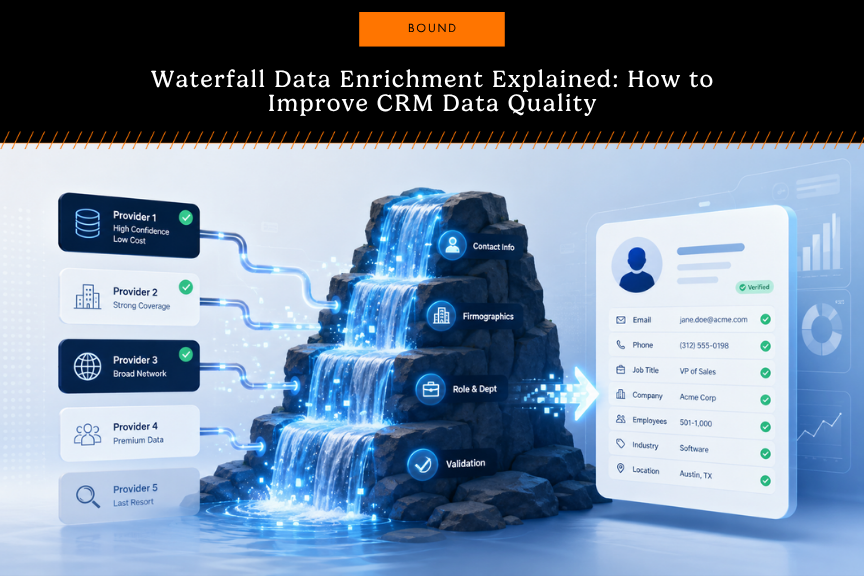
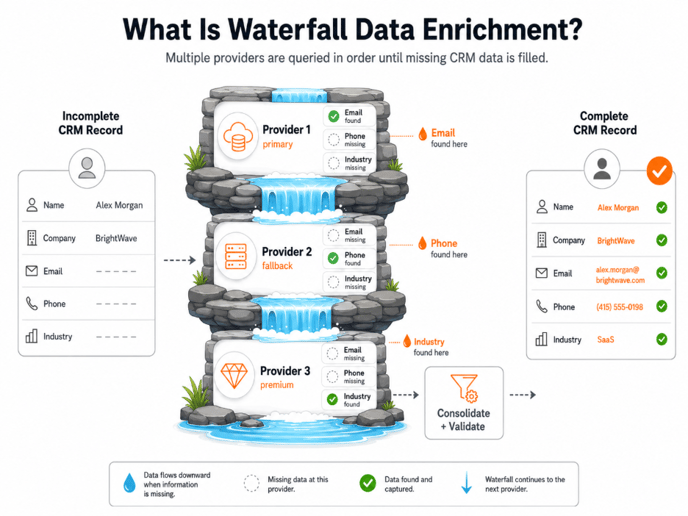
Waterfall enrichment is a sequential data strategy that cleans, validates, and enhances database records by querying multiple data providers in a predetermined order. Instead of relying on a single source, the approach treats providers like a hierarchy. The system queries the first provider—typically the most accurate or cost-effective option. If that source returns no data or incomplete information, the process automatically flows to the next provider, and so on, until a match is found or all sources are exhausted.
Think of it like a waterfall: information cascades from one level to the next, filling gaps as it goes.
Why Data Gaps Hurt Your Business
Every data provider has blind spots. One vendor might excel at capturing phone numbers but miss industry classifications. Another might have comprehensive firmographic data but lack email addresses. These gaps create problems downstream. When sales teams inherit incomplete records, campaigns risk targeting the wrong personas or leaving key decision makers out of outreach. Lack of data can become a bottleneck, as pipeline velocity often slows because reps spend time researching instead of selling.
Waterfall data enrichment solves this by layering multiple sources. If your primary vendor lacks a specific data point, the next provider in the chain automatically fills the void. The result is cleaner, more complete records without manual intervention.
How Waterfall Enrichment Works
The process is straightforward:
-
Define your provider hierarchy. Rank data sources based on accuracy, cost, and coverage for your use case. Your most trusted or cost-efficient provider goes first.
-
Query the primary source. The system searches for matching records and returns available data.
-
Check for gaps. If critical fields are missing or incomplete, the process moves to the next provider.
-
Repeat until complete. The waterfall continues through your provider list until all required fields are populated or sources are exhausted.
-
Consolidate and validate. The enriched record is compiled, deduplicated, and validated before being added to your database.
Automating this process with workflows or using agents to check the data can eliminate the manual "clean-up" phase that typically bottlenecks sales cycles. This allows SDRs and Account Executives to spend their time selling to qualified, accurately-labeled prospects instead of hours researching and filling in missing data points.
Why Waterfall Data Enrichment Is the Best Choice: Cost, Speed, and Scalability
The Cost Efficiency Advantage
One of waterfall enrichment's biggest benefits is intelligent cost management. Premium data providers often charge per record or per query. By prioritizing low-cost or high-confidence sources first, companies only pay for premium data when baseline sources fail to provide necessary details.
This cascading structure means you're not overpaying for comprehensive enrichment on every record. Instead, you're using a tiered approach that balances cost with data quality. Records that need minimal enrichment stay cheap. Only records requiring deeper research tap into premium sources.
For sales organizations managing thousands of prospects, this approach can significantly reduce data acquisition costs while maintaining the accuracy needed for effective outreach.
Reducing Manual Data Entry Bottlenecks
Sales velocity depends on clean data. When reps inherit incomplete or inaccurate records, they either spend time fixing them or skip outreach altogether. Both scenarios hurt pipeline volume and health.
Waterfall data enrichment automates this cleanup. By the time a record reaches a sales rep, it's already been validated and enhanced across multiple sources. Phone numbers are verified, industry tags are accurate, and company size is confirmed. The rep can focus on selling, not updating important firmographics.
This is especially valuable for teams using data-driven sales strategies that rely on accurate firmographic and technographic information. The better your data, the better your targeting and personalization.
Waterfall Enrichment vs. Single-Source Enrichment
Single-source enrichment is simpler but riskier. You query one provider and accept whatever data comes back. If that provider doesn't have a record, you get nothing. If their data is outdated, you inherit the problem.
Waterfall enrichment adds complexity but eliminates single points of failure. Multiple sources mean better coverage, higher accuracy, and fewer gaps. The trade-off is worth it for sales organizations that depend on data quality.
Building a Waterfall Strategy
Implementing waterfall enrichment requires thoughtful planning:
Identify your data priorities. Which fields matter most for your sales process? Phone numbers, email addresses, job titles, company size, industry? Start there.
Evaluate provider coverage. Research which data providers excel at capturing the fields you need. Some specialize in B2B contact information. Others focus on company data. Choose providers that complement each other's strengths.
Establish your hierarchy. Rank providers based on accuracy, cost, and speed. Your first provider should be reliable and cost-effective. Subsequent providers fill gaps or provide premium enrichment.
Set validation rules. Define what "complete" means for your records. Do you need a phone number and email? A verified job title? Clear criteria ensure consistent enrichment.
Monitor and adjust. Track which providers are delivering the best data for your use case. Over time, you may find that reordering your hierarchy improves results or reduces costs.
Common Waterfall Enrichment Scenarios
Scenario 1: Lead Enrichment for Better CRM Data
A new lead comes in with only a name and company. Your waterfall queries your primary provider for contact details. If the email is missing, it moves to the next provider. By the time the lead reaches your sales team, it has a phone number, email, job title, and company information.
Scenario 2: Waterfall Enrichment for Account Expansion
You're targeting a new account, but only have a front desk phone number. Waterfall enrichment pulls decision-maker contacts, department information, and company size from multiple sources, giving your team a complete picture of the organization.
Scenario 3: General Data Quality Improvement.
Your existing database has outdated or incomplete records. Running these records through a waterfall enrichment process validates current information and fills gaps without requiring manual research.
Make Concept’s CRM Team Your Data Enrichment Superpower
Waterfall enrichment doesn't require a complete overhaul of your data infrastructure. Many CRM platforms and data enrichment tools now offer waterfall capabilities built-in. If your current tools don't support it, consider whether a dedicated data enrichment platform might be worth the investment.
Concept helps revenue teams automate CRM enrichment with intelligent waterfall workflows that query multiple providers in sequence, validate records in real time, and eliminate costly data gaps before they reach sales reps.
The result: cleaner CRM records, faster outbound execution, better targeting, and more time spent selling instead of researching.
Want to see how waterfall enrichment works inside your tech stack?
Talk to Concept about building a smarter enrichment workflow for your sales team.
Partner With Concept
Share your details and our team will reach out to discuss collaboration opportunities